
Turning a complex environmental problem into a working digital platform for Australia's oyster industry
- ClientOceanWatch Australia — Oyster Gear Finder
- IndustryEnvironment & Aquaculture
- PlatformsWeb, iOS & Android
- Project LinkVisit Website ↗


Business Context
Heavy rain and flooding can wash oyster farming equipment from leases into surrounding waterways. The result is lost equipment for farmers, additional work for clean-up organisations and plastic and farming infrastructure becoming marine debris.
OceanWatch Australia wanted to create a digital system that could help farmers register their equipment, enable lost gear to be reported and improve the chances of equipment being identified and returned to its owner.
The Problem
When Graham Agency joined the project, an early prototype had already been developed, but the product requirements, user journeys and functionality had not been clearly defined.
Rather than continuing to build on an unclear foundation, we returned to discovery and worked closely with stakeholders to understand what the platform actually needed to do and who it needed to work for.
The challenge extended beyond simply registering lost equipment. The system needed to support oyster farmers, people finding equipment and clean-up groups, while addressing matching, notifications, ownership, privacy, misuse and administration.
Discovery & Product Definition
We started again with our five-step UX-led process, undertaking detailed discovery with stakeholders and defining the different users, requirements and journeys before moving into design and development.
This included defining personas and mapping how oyster farmers, finders and clean-up groups would interact with the platform.
The discovery work was developed into a clear product blueprint that documented the proposed platform and provided OceanWatch with a defined direction for the next stage of the project and its ongoing funding discussions.
Our five-step UX-led process takes projects from discovery and requirements through to design, development and testing.
Our UX Process →We run a structured discovery process that defines requirements and plans the right platform before development begins.
Digital Blueprints →Designing the Experience
With the product requirements defined, we moved from low-fidelity wireframes through to high-fidelity interfaces and interactive prototypes, testing and refining the experience with stakeholders throughout the process.
A key UX challenge was designing distinct journeys for farmers and finders while making the process simple enough to use in the field.
We worked through how gear would be registered and reported, how potential matches would be identified, what information should be shared, when users should be notified and how owners could safely recover their equipment.
Privacy and responsible use were also considered throughout the experience, including how location information was handled and how inappropriate or suspicious activity could be reported.
Matching Lost Gear
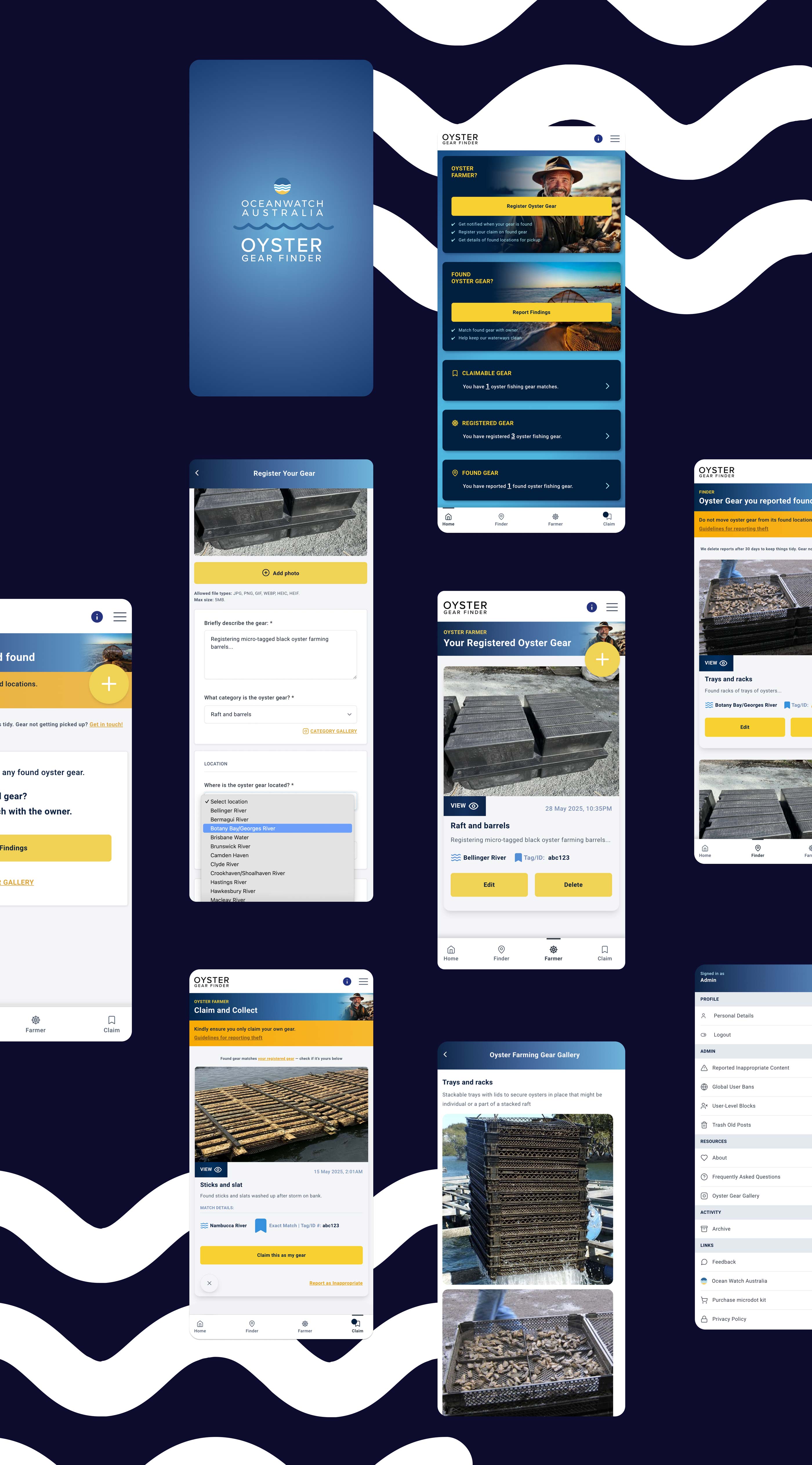
The finished platform connects registered and reported gear using identifying information such as gear IDs and estuary/location data.
When the system identifies a potential match, the relevant farmer can be alerted so they can investigate and arrange recovery.
This creates a practical connection between equipment registration, reporting and recovery rather than leaving lost-gear information fragmented across different channels.
In-house development across websites, applications and integrations, built around your business requirements.
Development Capabilities →What We Delivered
The solution was delivered as a web application across web, iOS and Android.
- In-depth discovery and requirements definition
- User personas and journey mapping
- Product blueprint
- Information architecture and application flows
- Low-fidelity wireframes
- High-fidelity UX/UI design
- Interactive prototypes
- Web application development
- iOS and Android delivery
- Gear registration and reporting workflows
- Matching and notification logic
- Email alerts
- Claim and recovery workflows
- User reporting and moderation
- Administration and monitoring system
- Phase 2 refinements and improvements
Results
The platform helps farmers register and recover lost gear, connects finders with owners, supports clean-up groups in locating equipment, and helps reduce plastic and farming debris left in local waterways.
From Prototype to Working Product
An unclear early concept was transformed into a defined, designed and functioning digital platform.
One System for Registration and Recovery
Farmers can register equipment, finders can report what they discover and potential matches can trigger notifications to support recovery.
Designed for Different Users
Separate journeys support farmers, finders and clean-up groups while keeping the experience practical for mobile use in the field.
Delivered Across Web, iOS & Android
The platform was developed as a web application and delivered across web and mobile platforms.
Tools for OceanWatch to Manage the Platform
Administration and moderation functionality gives OceanWatch oversight of users, reports, inappropriate activity and platform content.
Have a Project in Mind?
Let's talk about turning an ambiguous product problem into a working, user-tested platform.
Start a Project →